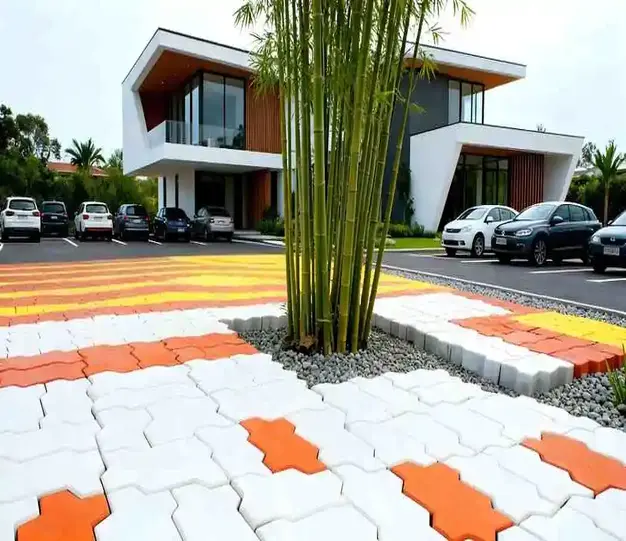
Paver Blocks are precast concrete products used for flooring, roads, parking areas, footpaths, and landscaping. These blocks are designed to provide high strength, durability, and attractive appearance. They are widely used as a replacement for concrete flooring and asphalt roads. Paver blocks offer better durability, easy maintenance, and attractive design.
Manufactured from a zero‑slump concrete mix under high pressure and vibration, they deliver superior compressive strength (typically 30‑50 N/mm²) and excellent resistance to weathering and heavy loads.
Custom colors and designs available
✓ Proper thickness ensures long life and load capacity
Paver blocks are manufactured using high‑quality materials:
High strength, long life, good finish
Advantages: High strength blocks, uniform size & finish, suitable for heavy load, premium quality.
Advantages: Lower production cost, suitable for small projects, flexible design production.
Limitation: Slight variation in size, lower strength compared to hydraulic press.
Suitable for heavy vehicles and industrial loads.
Fast laying process without long curing.
Strong bonding without cement mortar.
Multiple designs and colors available.
Replace individual blocks without disturbing whole area.
Prevents water logging through joints.
Superior performance over traditional surfaces
| Feature | Paver Blocks | Concrete Flooring |
|---|---|---|
| Installation Time | Fast | Slow |
| Repair | Very Easy (replace block) | Difficult (break whole area) |
| Cracking | Very Low | High chances |
Paver blocks are more practical, attractive, and easy to maintain compared to concrete flooring.
| Feature | Paver Blocks | Asphalt |
|---|---|---|
| Durability | High | Medium |
| Heat Resistance | High | Low (melts in heat) |
| Maintenance | Low | Frequent repairs |
Conclusion: Paver blocks are more durable and suitable for long-term use than asphalt.
| Feature | Paver Blocks | Cement Floor |
|---|---|---|
| Water Drainage | Good (through joints) | Poor (water logging) |
| Surface Cracks | Rare | Common |
| Reusability | Yes | No |
Conclusion: Paver blocks provide better drainage, flexibility, and long-term performance.
| Feature | Paver Blocks | Tiles |
|---|---|---|
| Cost | Affordable | Expensive |
| Strength | High | Medium |
| Slip Resistance | Good | Slippery |
Conclusion: Paver blocks are much better for outdoor and heavy-load areas compared to tiles.
| Feature | Paver Blocks | Natural Stone |
|---|---|---|
| Cost | Affordable | Expensive |
| Installation | Easy | Difficult |
| Maintenance | Low | Medium |
Conclusion: Paver blocks give similar strength with better cost efficiency and flexibility.
Paver blocks combine structural performance with endless design possibilities — the smart, sustainable, and stylish choice for any outdoor hardscape project.
