Introduction to Solid Concrete Blocks

Solid Concrete Blocks are high-strength walling materials used as a modern alternative to traditional red clay bricks for strong and durable construction.

They are widely used in residential, commercial, and industrial construction where strength and load-bearing capacity are required.

👉 Solid concrete blocks are ideal for projects where durability and structural strength are top priority.
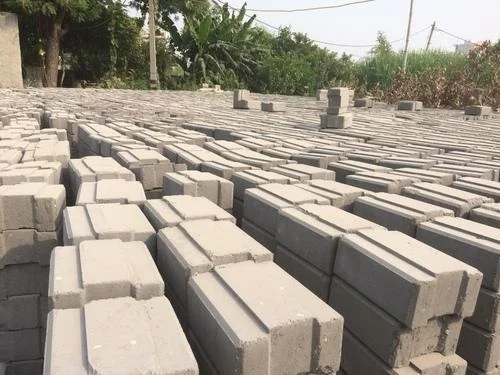
  • 400mm × 200mm × 100mm – Partition walls
  • 400mm × 200mm × 150mm – Internal walls
  • 400mm × 200mm × 200mm – External / load‑bearing walls
Usage: Use 100mm for partition walls, 150mm for internal walls, and 200mm for external / load‑bearing walls.
concrete_standard

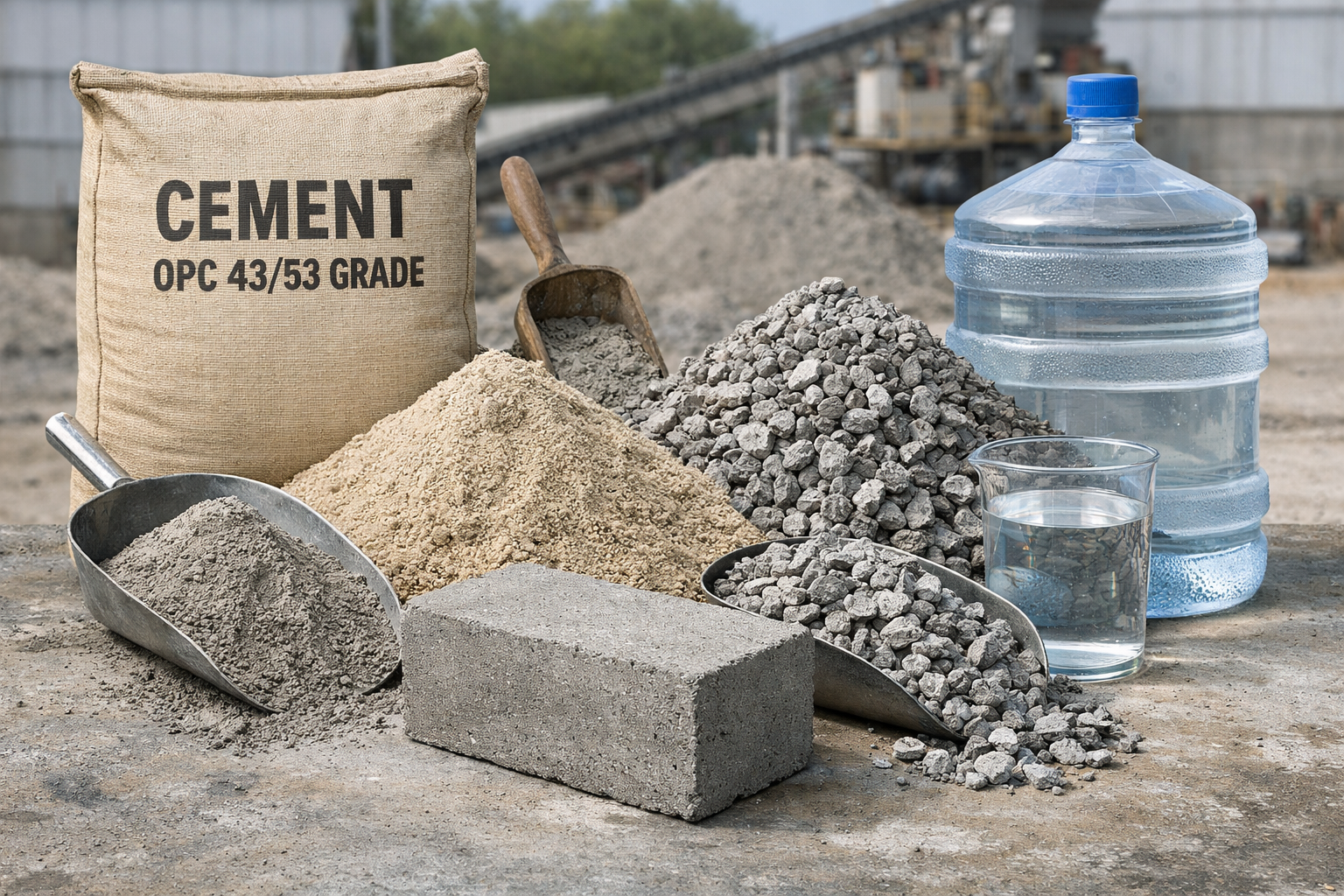
Solid concrete blocks are made using:

  • Cement – Binding material
  • Sand – Fine aggregate
  • Stone Aggregates – Strength and density
  • Water – Mixing

👉 Unlike AAC blocks, these are dense and solid without air pockets, giving them higher strength.
concrete_raw

Manufacturing Process

🔹 1. Raw Material Mixing

Cement, sand, aggregates, and water are mixed in proper ratio.

🔹 2. Mould Filling

The mixture is poured into block moulds.

🔹 3. Vibration & Compaction

High vibration and pressure are applied:

  • Removes air voids
  • Increases density
🔹 4. ABB

ABB

Technical Properties

  • Density: High (1800–2000 kg/m³ approx)
  • Compressive Strength: High (5–15 MPa depending on grade)
  • Water Absorption: Moderate
  • Load Bearing Capacity: Excellent

Environmental Aspect

  • Uses cement and aggregates
  • Not as eco‑friendly as fly ash, but durable and long‑lasting

Benefits of Solid Concrete Blocksv

Durable & Long Life

  • Resistant to wear and damage
  • long-lasting construction

Faster Construction

  • Larger size blocks
  • fewer joints
    • saves time

Fire Resistant

  • Non-combustible
  • safe for buildings

Cost Analysis & Savings

Labour Cost Reduction

15–25%

Larger block size

faster laying

Mortar Saving

20–30%

Fewer joints

controlled thickness

Time Saving

20–25%

Faster wall construction

Solid Concrete Block vs Other Materialsb

Solid Concrete Block vs Red Clay Bricks

Issue Red Brick Concrete Block Advantage
Strength Medium High
Size variation Uneven Uniform
test test test

Solid Concrete Block vs Fly Ash Bricks

Feature Concrete Block Fly Ash Brick
Strength Higher High
Weight Heave Light
test test test

Solid Concrete Block vs AAC Block

Feature Concrete Block AAC Block
Strength Higher High
Weight Heavy Light

Problems in Red Bricks (Solved by Concrete Blocks)

🔹 Uneven Size

  • Bricks are irregular
  • Blocks are uniform

🔹 Slow Construction

  • Small size bricks
  • Concrete blocks are larger

🔹 High Mortar Use

  • Thick joints in bricks
  • Less joints in blocks

🔹 Lower Strength

  • Bricks weaker
  • Concrete blocks stronger


Applications of Solid Concrete Blocks

Residential building
Apartments
Commercial buildings
Industrial structure
Boundary walls
Load-bearing walls

Masonry Process (How to Use)

  • Surface preparation
  • Mortar application
  • Block laying with alignment
  • Maintain joint thickness (10–12 mm)
  • Proper curing

Result:

  • Strong wall
  • long-lasting structure

Additional Benefits

  • High structural stabilityy
  • Suitable for heavy construction
  • Easy handling and stacking
  • Reliable performance
  • Widely used in large projects

Overall Savings Summary

Component Savings
Labour 15–25%
Mortar 20–30%

Why Builders Choose Concrete Blocks

Final Conclusion

Solid Concrete Blocks are the best choice for:

  • ✔ Strong construction
  • ✔ Heavy load structures
  • ✔ Long-lasting buildings

👉 They provide strength, durability, and efficiency in modern construction.

“If strength is your priority, Solid Concrete Blocks are the smartest choice for your construction.”

🎯 PRO TIP

Use: 100mm → Partition 150mm → Internal & External 200mm → External / Load-bearing